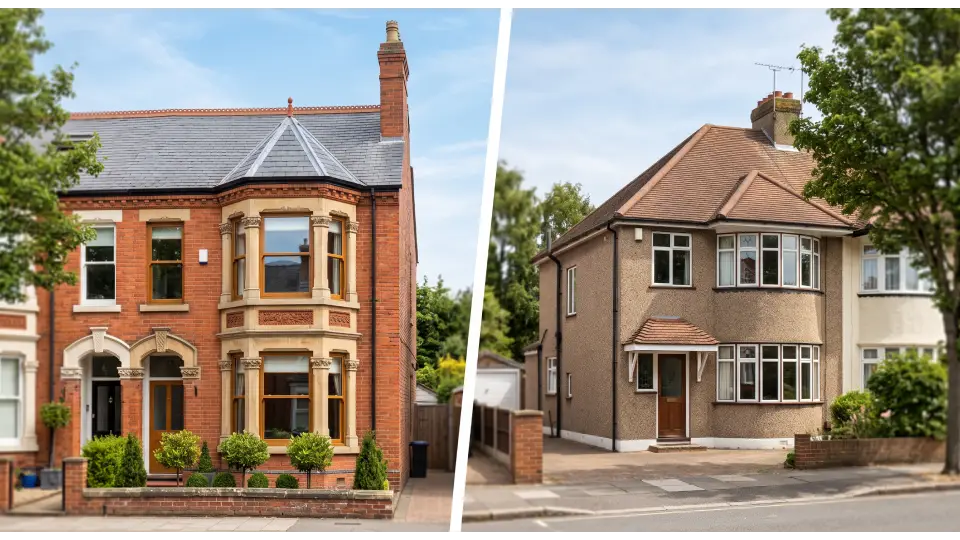

Leasehold Reform 2026: What the New Law Really Means for Flat Investors.
Six out of every ten properties sold in London last year were flats.
Six out of every ten properties sold in London last year were flats.
And of the sales where the owner lost money?
Nine out of ten were flats.
Landlords and investors see those two numbers and reach the same conclusion: avoid flats completely.
But the thing that makes flats lose money is about to be abolished. That thing is leasehold, the ownership system behind almost every flat in England. And this year, the government confirmed a new law to abolish it.
Leasehold reform 2026 could be the biggest shake-up this system has seen in over a century, though it's not law yet, and most flat owners haven't caught up with what it could mean for them.
By the end of this article, you'll know three things:
What Is the Difference Between Freehold and Leasehold?
When you buy a property in England or Wales, you buy it in one of two ways: either freehold or leasehold.
Freehold means you own the building and the land it stands on, outright, forever. Most houses are sold freehold.
Leasehold means you own the right to live in the property for a fixed number of years, eg. 99, 125, sometimes even 999. But the land, and ultimately the building, belong to someone else: the freeholder. When you buy a leasehold flat, you've bought a very long, very expensive rental agreement.
There are roughly five million leasehold homes in England and most flats are sold this way.
The system genuinely dates back to mediaeval England when the king owned all the land and everyone below him merely held rights to use it.
Nearly every comparable country has abolished it.
In America, flat owners own condominiums.
The flat is theirs, full stop.
In Australia, it's called strata title.
In Scotland, when you buy a flat, you own it outright and the shared parts of the building are split between the owners.
England and Wales are unusual among developed countries because they still use the leasehold system. One reason it has survived for so long is that freeholders can continue charging leaseholders through ongoing fees and charges, even after the leaseholder has already bought the property.
What Are the Three Charges That Make Leasehold Flats So Expensive?
Service charge
Your share of the cost of looking after the building: cleaning, lifts, insurance, repairs. That sounds fair, until you see how it works. The freeholder or their managing agent decides what gets spent and who gets the contracts, and the leaseholder gets an invoice they're legally required to pay, with almost no say in any of it.
The average service charge in England and Wales is at £2,405 a year. That’s over £300 a month before your mortgage.
Over the last five years, those charges have risen by about a third.
Here's where an expensive bill becomes a serious problem: 37% of flats now have a service charge above 1% of the property's value.
That 1% line matters, because when a service charge crosses it, mortgage lenders start refusing to lend on the flat. And a flat a bank won't lend on is a flat almost nobody can buy, because nearly every buyer needs a mortgage. The owner did nothing wrong, the charge rose, the lenders refused, and the flat became close to unsellable.
Imagine you put your two-bedroom flat up for sale at a sensible price and get two viewings. Both buyers liked the flat. Both said ‘no’ for the same reason: the service charge had risen to £3,500 a year. It’s not your fault but your flat has become almost impossible to sell.
Ground rent
A payment to the freeholder for nothing: not services, not maintenance, nothing.
It exists purely because they own the land under the building. Some contracts are written with clauses that double every 10 or 15 years, buried in small print most buyers never read. Between 2007 and 2011, major housebuilders sold thousands of new-build homes with leases where the ground rent doubled every decade. A few hundred pounds a year at purchase becoming thousands within a few decades. Many buyers only discovered the clause when they tried to sell, and nobody would buy.
Ground rent has its own mortgage rule: once it exceeds 0.1% of the property's value, lenders start refusing again. On a cheap flat up north, an ordinary-sounding £250 a year can cross that line on its own.
Note those two numbers, the 1% service charge line and the 0.1% ground rent line. They're the first two checks an educated investor runs on any flat before making an offer.
How Wide Is the Flat vs House Price Gap in 2026?
Six out of every ten properties sold in London last year were flats.
Of the sales where the owner lost money, nine out of ten were flats.
A London flat seller is six times more likely to sell at a loss than a house seller.
Zoopla's figures show the price gap between houses and flats is now the widest in 30 years, the average house is worth 1.7 times the average flat. First-time buyers, the people who'd normally buy flats, are avoiding them: the share looking for one and two-bed flats has fallen from 25% to 17% since 2017, while more than half now want a three-bed house instead.
And one more thing the current system allows, which almost nobody talks about: if a leaseholder falls behind on charges by as little as £350, the freeholder can go to court and take the flat.
Not the debt, the flat.
A leaseholder with £200,000 of equity can lose every penny of it over a few missed service charge payments, and the freeholder keeps the difference. Yes, a leaseholder in England and Wales can lose their property through a legal process called forfeiture. If service charges, ground rent, or other lease obligations remain unpaid, a freeholder may be able to take back the lease. In some cases, the leaseholder can lose significant equity in the property, making forfeiture one of the most severe consequences of breaching a residential lease under English property law.
Flats aren't cheap because flats are bad.
Flats are cheap because the ownership system behind them is bad.
Why Has Leasehold Reform Failed Before? A 150-Year History
Parliament has been trying to fix leasehold since the 1800s.
Not decades, but centuries.
On her final day as Prime Minister, Margaret Thatcher put forward a draft bill to create commonhold, where flat owners jointly own the building with no freeholder collecting from any of them. That was 1990.
John Major promised it in his 1992 manifesto. Tony Blair finally made commonhold law in 2002, but it failed completely. The rules demanded agreement from every single owner and every mortgage lender in a building before a block could convert, which is why, more than 20 years later, fewer than 20 commonhold developments exist in the entire country.
In 2020, the Law Commission published a complete plan to fix it.
In 2024, Parliament passed the Leasehold and Freehold Reform Act and never brought most of it into force. Promise after promise, act after act, and 5 million leaseholders are still living under the same system Thatcher tried to end.
What Does the Commonhold and Leasehold Reform Bill Actually Change?
The Commonhold and Leasehold Reform Bill, announced in the King's Speech in May 2026, could reshape the leasehold system from top to bottom.
The fair question is: why would this time be any different?
Here's what's actually in it:
Is Leasehold Reform Law Yet? When Does It Take Effect?
The bill is in front of MPs for line-by-line scrutiny right now, with the final version expected later this year. It isn't expected to take full effect until around 2028 at the earliest, and in April, the Housing Minister admitted the ban on new leasehold flats may not happen within this Parliament at all.
After 150 years of broken promises, assume delay.
And that delay is precisely the opportunity. Flats are priced today for the old rules, and the new rules arrive years later. Flat prices have fallen because buyers fear the three bills you now understand. The government has published a law that targets all three, and most buyers are still avoiding flats anyway. This is the situation educated investors wait years for; buying the right flat at today's prices, in a market still priced for the old rules.
But the right flat is the entire game. It means knowing the lease length before you offer, running the service charge against that 1% line, checking the ground rent against the 0.1%. Buy the wrong flat at the wrong price, without those checks, and you become one of the trapped owners this article is about.
The difference isn't luck. It's education.
Finished reading?
- Take the next step.
If you are ready to take the next steps on your property journey
then our upcoming webinar is the perfect place to start.
About Progressive Property
Progressive Property has created more property millionaires and success stories in the UK than any other property investing education provider. Since 2007, Rob Moore, Mark Homer and their team of experts have built a welcoming, tight knit community to help people achieve freedom, choice and profit by investing in property.

Join Our Next Online Event!
Property Investing: Take Control Of Your Financial Future TODAY.
Register now